




How one woman overcame adversity and found success in space.
Diana Trujillo has always looked to the stars.
Growing up in Colombia during the 1980s, a place and time known for its civil unrest, she would stargaze to escape from the danger in her country. “I knew there had to be something better than this,” she recalls, adding, “Somewhere better than where I was.”
It’s that yearning which pushed Trujillo to immigrate to the United States with only $300 in her pocket, receive a degree in aerospace mechanics and biomechanics, and become one of the first Hispanic women to break into the aerospace industry.
Today, Trujillo oversees dozens of engineers and spearheads crucial projects, including a rover mission to Mars to explore the Gale Crater with one of the most technologically advanced rovers ever built.
We recently sat down with Trujillo to discuss resilience, the future of STEM (science, technology, engineering, mathematics), and her advice for thriving in a male-dominated industry. Here’s an excerpt of the conversation, edited and condensed for clarity:
Q:| You went from being a Hispanic immigrant who didn’t speak English to one of the country’s top female engineers. How did you turn what many would consider an adversity into an asset for your career?
It was an asset the whole time—I needed to decide how I would see it. My upbringing has taught me that you never give up. I’m not shy of asking what I want to do. I don’t run away from the problem; I run toward the problem. It’s something my peers find very valuable, because they know I’m going to grab any problem by the horns.
Q:| What’s been the biggest challenge in your career so far and what did you do to overcome it?
Honestly, the biggest challenge has been to get over myself. I often text my husband saying, “Oh, man, I’m in a meeting with 17 people and I’m the only girl.” So what if I’m the only girl? It doesn’t make me less capable. I’m all about having more women in the workforce, and having more women of color in the workforce. So, when there aren’t any other women in the room, I need to do my best and let other women in. If I’m too preoccupied about being the only one, I won’t perform.
Q:| What advice do you have for women to get over themselves, own a room, and own their place at the table?
It’s not about you; it’s about the goal. You need to focus on the goal. Nobody’s going to argue with you if your discussion is all about the goal. When the goal is bigger than you, it’s doesn’t matter who sets it because it’s for the greater good of the team.
Continue onto JP Morgan Chase to read the complete article.

Men have floated out the hatch on all 420 spacewalks conducted over the past half-century. That changed Friday with spacewalk No. 421.
NASA astronauts Christina Koch and Jessica Meir ventured outside the International Space Station before 8 a.m. ET Friday and will spend over five hours replacing a broken battery charger, or BCDU. NASA’s livestream of the historic spacewalk features astronaut Tracy Caldwell Dyson as one of the female narrators.
The units have previously been replaced using a robotic arm, but the newly failed unit is too far away for it to reach.
The units regulate how much energy flows from the station’s massive solar panels to battery units, which are used to provide power during nighttime passes around Earth. Three previous spacewalks had been planned to replace lithium-ion batteries, but those will be rescheduled until the latest BCDU issue is resolved.
The hardware failure does present some concern, especially since another BCDU was replaced in April and there are only four more backups on the station. In total, there are 24 operational BCDUs.
The battery charger failed after Koch and a male crewmate installed new batteries outside the space station last week. NASA put the remaining battery replacements on hold to fix the problem and moved up the women’s planned spacewalk by three days.
All four men aboard the ISS remained inside during Friday’s spacewalk.
The spacewalk is Koch’s fourth and Meir’s first.
Continue on to USA Today to read the complete article.

Oak Ridge Associated Universities (ORAU) is no longer a secret in Oak Ridge, Tenn. Nestled near the foothills of the Great Smoky Mountains National Park, Oak Ridge is nicknamed the Secret City after its role in the top-secret Manhattan Project that helped create the first atomic bomb.
Established in 1946, ORAU’s purpose was to advance science and technology education and research by providing member universities access to atomic energy research facilities. Holding true to the original purpose today, ORAU provides exceptional talent in innovative scientific and technical solutions to advance national priorities in science, education, security and health. Through specialized teams of experts, unique laboratory capabilities and access to a consortium of more than 100 major Ph.D.-granting institutions, ORAU works with federal, state, local and commercial customers to advance national priorities and serve the public interest.
ORAU also manages the Oak Ridge Institute of Science and Education (ORISE) for the U. S. Department of Energy (DOE), which is a DOE asset dedicated to enabling critical scientific, research and health initiatives of the department and its laboratory system by providing world-class expertise in STEM workforce development, scientific and technical reviews and the evaluation of radiation exposure and environment contamination.
While ORAU itself has been one of the best-kept secrets in East Tennessee, its reputation regarding the company’s culture and diversity practices is quickly spreading as seen in a recent employee survey. Completed earlier this year, the survey showed that 94 percent of the employees know what is expected of them in the workplace, 87 percent reported that they are proud to work at the company and 87 percent of all employees believe they are treated with dignity and respect.
According to Culture Amp, a worldwide employee feedback and analytics platform, companies with 500 employees but fewer than 1,000 employees can anticipate about a 70 percent employee participation rate in general surveys. ORAU greatly exceeded that standard with an overall participation rate of 85 percent. To ensure a culture that maintains these incredible ratings, ORAU welcomes feedback from employees through surveys and information-sharing teams, such as its Diversity Council and Employee Relations Team, comprised of employees from across the organization.
With an overall corporate favorability score of 77 percent and with 73 percent of ORAU employees believing the corporate culture is favorable, it is no longer a secret that ORAU is a great place to work.
For nine consecutive years ORAU has been recognized as a Best Diversity Company and is in competition for the current year. ORAU defines diversity as all of the ways in which we differ and all of those differences are welcomed and respected in the workplace and the community.
ORAU is an Equal Employment Opportunity employer and aggressively seeks veterans, individuals with disabilities, females, minorities and all other diverse differences that support an all-inclusive work environment. For more information on ORAU and its employment opportunities, visit orau.org.

The United States Mint is to memorialize Christa McAuliffe, the teacher and astronaut who died in the Challenger disaster in 1986, with a commemorative silver dollar coin.
The 37-year-old social studies teacher from Concord, New Hampshire, was chosen for NASA’s “Teacher in Space” program, and was one of the seven crew members aboard the Space Shuttle Challenger when it exploded.
A faulty rocket booster caused the shuttle to break apart soon after it lifted off.
The Christa McAuliffe Commemorative Coin Act of 2019 was passed by Congress, and the bill will go to the President to be signed into law.
The act calls for the Department of Treasury to “issue not more than 350,000 $1 silver coins in commemoration of Christa McAuliffe.”
If the President signs the act, the coins will be minted in 2021 to commemorate the 35th anniversary of the tragedy.
The coins will be sold to the public at a price that includes the face value of the coins, the cost of their design and issue, and a $10 surcharge per coin to benefit the an organization called For Inspiration and Recognition of Science and Technology (FIRST).
FIRST uses robotic competitions to encourage children to pursue opportunities in science, technology, engineering and mathematics.
Continue on to CNN to read the complete article.


With dozens of new brands entering the market each month and its own National holiday on August 8, CBD is quickly penetrating the daily lives of consumers. Between the proliferating field of options and the wide array of formula choices and strengths, how do consumers know where to start? How much should they take? In what form, and how often?
Having built dozens of consumer products and brands between them, co-founders Coco Meers (L’Oréal Alumna and Founder of PrettyQuick, acquired by Groupon in 2015) and Marcy Capron-Vermillion (Founder of Polymathic, acquired by DevMynd 2017) created Equilibria to restore balance to modern women by demystifying the CBD journey, from starting dose to personalized routine development and ongoing Dosage Specialist support.
“The CBD market is expanding at a rapid rate, with little regard to quality, service and education,” Meers said. “We saw an opportunity to deliver not only the highest quality CBD on the market, purpose-built to deliver maximum therapeutic benefits, but white glove, clinical luxury service that caters to each woman individually.”
In a sea of CBD brands, Equilibria— launched this year—offers personalized dosage support led by veteran cannabis educators and unparalleled quality from their exclusive bioscience partner—all to advance the mission of balance for women. CBD as a service – personalized dosage support for all members.
A 37-year-old working mother with insomnia and exacerbated stress during her period. A 73-year-old plagued with chronic pain whose arthritis prevents her from playing with her grandkids. These women are part of Equilibria’s community, and Equilibria gets to know them and their health goals from the start of their journey.
CBD is not a one-size-fits-all solution. Female body chemistry, age, metabolism, health goals, and current medications influence the amount of CBD they need and how often they should take it. With daily and consistent use, CBD can change lives. Products and services focus on restoring balance to the lives of women. CBD works with the body to promote balance, and women’s bodies need balance. Equilibria’s female-led team delivers on this vision by focusing their service and R&D efforts on CBD science and female biochemistry. From hormonal regulation and anxiety to auto-immune and inflammation, women’s physiological and mental health systems can easily swing out of balance. CBD helps achieve homeostasis throughout the body’s systems. Equilibria’s Dosage Support team is trained in female biochemistry and applications of CBD for female health. To offer clinical support and maximum therapeutic benefits requires that Equilibria have complete confidence and transparency into the consistency and mquality of their supply chain.
For Marcy and Coco, white-labeling wasn’t good enough. Equilibria is proud to join forces in an exclusive partnership with CFH, LTD—a leading bioscience firm and industrial hemp producer in Longmont, Colorado. Coco and Marcy surveyed the landscape of CBD white-label manufacturers, but it didn’t feel right to purchase product and re-label. These science- oriented and data-driven leaders needed to know that every step of the process was optimized for consumer safety and medical-grade results. They chose to partner with CFH and work together as partner companies with shared ownership—because they recognized the CFH team was as passionate about traceability, consistency,and results as they were.
Source: Equilibria

Each year, the ADCOLOR Awards ceremony recognizes individuals making strides in the fields of marketing, advertising, public relations, media and entertainment, in diversity and inclusion.
For its 13th annual celebration—hosted by New York Times best-selling author Luvvie Ajayi and presented by Facebook, Google, YouTube, Microsoft and Omnicom Group—honored philanthropist, actress, producer and director of UnbeliEVAble Entertainment (and Haute Living cover star), Eva Longoria, among others.
Each of the nominees and honorees are carefully and thoughtfully chosen from a large pool of change makers in each of their respective industries. The winner in each category is the one who represents ADCOLOR’s motto best, which is “Rise Up and Reach Back.” They are honored not just for the accomplishments in their own careers, but also how they are able to give back to their community. The organization’s goal is to “create a network of diverse professionals to encourage and celebrate one another.”
“There is no better honoree to set the tone of Adweek’s inaugural Beacon Award than Eva Longoria,” said Lisa Granatstein, Editor, SVP, Programming, Adweek. “From her formidable seven-year-old Eva Longoria Foundation that empowers Latinas via STEM education and entrepreneurship to her leadership role calling for diversity in Hollywood, Eva’s remarkable accomplishments are both authentic and action-oriented.”
The inaugural Beacon Award honors talent who uses their celebrity as a catalyst to change the status quo in the quest for diversity and inclusion. In May, ADCOLOR and Adweek partnered on the first Champion awards and celebration recognizing the fearless leaders and rising stars in marketing and media who embody ADCOLOR’s call to “Rise Up. Reach Back.”
Continue on to Haute Living to read the complete article.


CBS announced today that new series Mission Unstoppable, featuring female STEM superstars, is joining the Saturday morning block “The CBS Dream Team, It’s Epic!,” which returns for its seventh season Saturday, Sept. 28th (9:00-12:00 ET/PT) on the CBS Television Network.
Each week, host and Executive Producer Miranda Cosgrove (iCarly) and an all-female leadership team showcase women on the cutting edge of science – including zoologists, engineers, astronauts, codebreakers, and oceanographers. Viewers will be inspired by female STEM (Science, Technology, Engineering and Math) superstars in leading fields including social media, entertainment, animals, design, and the internet – all categories key to the teen experience.
“Girls need to see themselves on and off the screen as STEM professionals, and as I always say, ‘If they can see it, they can be it.’ This new series strives to empower young women and showcase the many ways they can impact the world through careers in STEM.”
Academy-Award winning actor and advocate Geena Davis serves as co-executive producer of the series, bringing her passion for creating change in the portrayal of strong female characters in entertainment and media that positively influences young viewers.
“Strong female role models are essential to breaking down barriers and educating the next generation of leaders about gender equality,” said Geena Davis, Executive Producer, Mission Unstoppable. “Girls need to see themselves on and off the screen as STEM professionals, and as I always say, ‘If they can see it, they can be it.’ This new series strives to empower young women and showcase the many ways they can impact the world through careers in STEM.”
Serving as Showrunner is Anna Wenger, four-time Emmy-nominated producer for Billy on The Street, Between Two Ferns, and Sarah Silverman: We Are Miracles. Wenger’s expertise in narrative television and sketch comedy television series will provide Mission Unstoppable with its core intent to bring fun and science to life for young viewers.
Continue on to Businesswire to read the complete article.

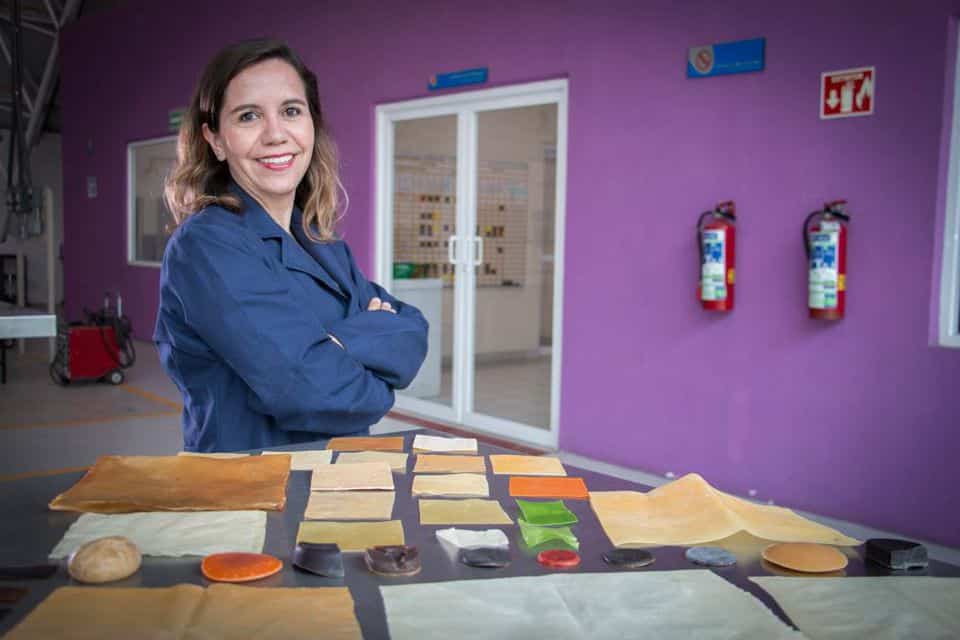
Researchers from the University of Valle de Atemajac in Zapopan, Mexico have created a biodegradable plastic from the juice of the prickly pear cactus.
The new material begins to break down after sitting in the soil for a month and when left in water, it breaks down in a matter of days. Plus, it doesn’t require crude oil like traditional plastics.
“There were some publications that spoke of different materials with which biodegradable plastics could be made, including some plants,” Sandra Pascoe Ortiz, the research professor who developed the material, told Forbes.
“In this case the nopal cactus has certain chemical characteristics with which I thought it could be feasible to obtain a polymer, that if it was combined with some other substances, all of them natural, a non-toxic biodegradable plastic would be obtained. The process is a mixture of compounds whose base is the nopal. It’s totally non-toxic, all the materials we use could be ingested both by animals or humans and they wouldn’t cause any harm.”
This means that even if any of this material made its way into the ocean, it will safely dissolve. It’s estimated that between 1.15 million to 2.41 million tonnes of plastic are entering the ocean each year from rivers. Last month, divers found a plastic KFC bag from the 1970s during an ocean clean-up off the waters off Bulcock Beach in Queensland, Australia and earlier this year, during a dive to the bottom of the Mariana Trench – the deepest point in the ocean – a plastic bag was found.
According to Ortiz, the project was born in a science Fair of the 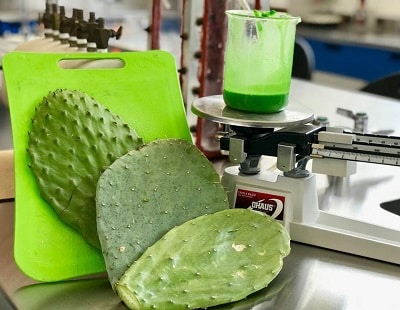 Department of Exact Sciences and Engineering, in the chemistry class with industrial engineering students of the career. They began to make some attempts to obtain a plastic using cactus as raw material.
“From that I decided to start a research project in a formal way. Currently in the project collaborate researchers from the University of Guadalajara in conjunction with the University of Valle de Atemajac.”
Continue on to Forbes to read the complete article.

Race car driver Jessi Combs, who earned the title of the “fastest woman on four wheels” after she set a record with a jet-powered car, died Tuesday while trying to beat a land speed record, officials said.
Combs died Tuesday in Alvord Desert in southeast Oregon, the Harney County Sheriff’s Office said. She was 39.
“She was a brilliant & to[p]-notch builder, engineer, driver, fabricator, and science communicator, & strove everyday to encourage others by her prodigious example,” said Adam Savage, former co-host of the TV show “Mythbusters.”
Combs appeared in multiple episodes of the show, while host Kari Byron was on maternity leave. She also appeared as a host in shows such as “All Girls Garage” and “Overhaulin’.”
Combs became the fastest woman on four wheels in 2013 at the North American Eagle Supersonic Speed Challenger, when she set a record of 398 mph.
In October, Combs set a new top speed of 483.2 mph in a shakedown run.
On Tuesday, she was attempting to go faster when she crashed.
“On August 27, 2019 at approximately 4:00PM the Harney County 911 Center received a call reporting that a jet car attempting to break a land speed record on the Alvord Desert had crashed leading to one fatality,” the sheriff’s office said.
Her resume was full of firsts: the first woman to place at any Ultra4 event; the first woman to compete in The Race of Gentlemen event.
Savage also tweeted “I’m so so sad, Jessi Combs has been killed in a crash. She was a brilliant & too-notch builder, engineer, driver, fabricator, and science communicator, & strove everyday to encourage others by her prodigious example. She was also a colleague, and we are lesser for her absence.”
Her dedication to women’s empowerment in the automotive industry was also significant. She has a line of women’s welding gear with Lincoln Electric, as well as an online collaborative dedicated to empowering and educating women through industrial skills, called the RealDeal.
Continue on to CNN News to read the complete article.

By: Rochelle L. Williams, PhD, ARC Network Project Director, AWIS
The ARC Network, an initiative of the Association for Women in Science (AWIS), elevates thought leadership on the successes and challenges to realizing equity in STEM. Since 2009, AWIS has worked with the National Science Foundation (NSF) to convene ADVANCE institutions and NSF Gender in Science and Engineering (GSE) program to discuss synthesizing quantitative and qualitative approaches affecting gender composition and representation in STEM education workplaces.
By combining AWIS’ convening power and the ARC Network’s mission to advance equity in STEM, we’ve sought to create community, not another conference that promises a magical solution to research problems.
The 2019 Equity in STEM Community Convening builds on the momentum of the NSF ADVANCE/GSE Workshops, while simultaneously curating an experience that embodies a culture of innovation and inclusion. Traditional meeting features (i.e., poster sessions, networking coffee breaks and interactive breakout sessions) are infused with components that amplify, revolutionize and cultivate a community of researchers and practitioners.
To increase the reach and visibility of proven strategies that promote equity in STEM, additional avenues for authentic storytelling have been incorporated into this year’s programming. To start, presenters will stretch themselves by submitting visual abstracts, visual summaries of their presentations instead of the traditional text-based abstract. Shifting to visual abstracts allows easy distribution of their work within the ARC Network and with external audiences using social media. In addition to having prominent keynote speakers and poster showcase, the Equity in STEM Community Convening will also feature Lightning Talks during the networking reception. The Lightning Talks will challenge presenters to outline the highlights of their work and explain its importance within five minutes.
The Equity in STEM Community Convening will highlight high-quality research and works-in-progress that have potential to advance and transform STEM workplaces. The Early-Stage Innovations sessions will support new researchers and practitioners looking to share the initial phase of their work or seeking feedback from the community. Experience Reports, sessions dedicated to those on the frontline of change, are designed for well-developed and/or later-stage initiatives or research.
We’ve also introduced a new priority area, ADVANCE to Market. Presentations will center on research, programs, and practices that discuss academic STEM entrepreneurship and commercialization, including social equity issues and taking diversity and inclusion research and resources to market.
Advancing equity in STEM requires an intentional focus on creating authentic, sustainable and inclusive environments while simultaneously cultivating a community that collaborates, shares and implements promising practices and tools shown to affect change. Presenter-designed Symposia and Workshops are meant to give participants the time to reflect and create, both individually and with others. The informal setting of the Networking Breaks make way for relaxed exchanges that are crucial for the learning process.
In a world with too many conferences, too many broken promises and not enough time, you’ll leave the convening inspired to take your work to the next level and, more importantly, knowing there’s a community ready to support you in your efforts toward #EquityinSTEM.
Join the ARC Network Community! This AWIS initiative connects scholars and practitioners committed to equity in STEM at no cost. In collaboration with Mendeley, the ARC Network hosts a dedicated online group for members to access and contribute to a rich library of curated resources – including reports, articles, datasets, toolkits, videos and more – that serve as an important part of systemic change efforts. As the go-to hub for community collaboration, the platform also offers members the opportunity to share events hosted by the community and their institutions as well as online learning opportunities, such as webinars and virtual workshops. There is no cost to register. AWIS Membership not required.
Equity in STEM “First Look.” Published on SSRN, this quarterly digest allows peers to share a wide range of STEM equity content and early stage research, empowering the community with early access to the tools and knowledge needed for change. The inaugural publication provides a historical perspective of the NSF ADVANCE program and outcomes of and lessons learned from past awardees.
Rochelle L. Williams, PhD, is Project Director for the ADVANCE Resource Coordination (ARC) Network for AWIS. The ARC Network has a primary focus on organizational and institutional systemic change from both the research and practical perspectives. Before joining AWIS, Dr. Williams served as Research Scientist in the Office for Academic Affairs at Prairie View A&M University. Since 2012, Dr. Williams has worked as a subject-matter expert for the National Science Foundation on issues about cultures of inclusion, broadening participation, and university education programs. Dr. Williams received a Bachelor of Science in Physics from Spelman College and both a Master of Engineering in Mechanical Engineering and Doctorate in Science and Mathematics Education from Southern University and A&M College.
AWIS is a global network with 80 grassroots chapters and affiliates connecting more than 100,000 professionals in STEM with members, allies and supporters worldwide. Founded in 1971, AWIS has been the leading advocate for women in science, technology, engineering, and mathematics (STEM) to achieve business growth, social change, and innovation. We are dedicated to driving excellence in STEM by achieving equity and full participation of women in all disciplines and across all employment sectors.
Funded by the National Science Foundation ADVANCE Program, Award HRD-1740860, the ADVANCE Resource and Coordination (ARC) Network seeks to achieve gender equity for faculty in higher education science, technology, engineering, and mathematics (STEM) disciplines. As the STEM equity brain trust, the ARC Network recognizes the achievements made so far while producing new perspectives, methods and interventions with an intersectional, intentional and inclusive lens. AWIS serves as the backbone organization of the ARC Network.


By Jaeson “Doc” Parsons
Charu Sharma is the founder and CEO of NextPlay.ai, a company focused on intelligently pairing employees with mentorship and cross-functional relationships. Companies, such as Square, Netflix and Asurion, use NextPlay’s mobile app to build mentorship programs to better equip their employees to build critical leadership and coaching skills.
Diversity in STEAM Magazine spoke with Charu about her background, her insight into women in tech, and the future of Artificial Intelligence.
Growing up in India, she describes her early life as a bubble where women were raised to be stay-at-home moms.
“I was on track to go study at the premier engineering institute in India,” she said, “but I was very attracted to the liberal arts education in the U.S. where I could study a range of disciplines from world politics to physics to film studies and develop my critical thinking skills.”
Her family was unable to provide for an American education, but she was able to gain a scholarship to study in the United States. Charu decided on Mount Holyoke College in Massachusetts, which was the first institution in the United States where women could earn degrees.
“The values and culture at my college also hugely shaped how I looked at the world and the contribution I wanted to make in society,” she said.
While at Holyoke, Charu began as an intern at a startup called SumZero, which was funded by the Winklevoss twins of Facebook fame.
“I did meaningful business-critical work. And my mentor, the CEO of the company, was a young brown man. I identified with him. The next time I saw a problem, I built a solution for it. The power of role models is huge.”
For that reason, she started GoAgainsttheFlow.com, which through storytelling educated one million women around the world on starting their own businesses.
“I was lucky to have role models, and I wanted them to see someone like them in those shoes. In Go Against the Flow, I told stories of successful women entrepreneurs ranging from an 18-year-old college dropout to a woman in her 50s—they all went against the flow and wrote their destiny. Self-doubt holds us back more than anything else. Which is why it’s so important to create mentoring opportunities for young women so that they know their options and have someone cheering for them.”
Charu is working to effect change worldwide regarding the global opportunities for women. At her core she is driven by leveling the playing field to create real opportunities for women and minorities.
“I realize I’m part of a system and so I try to do three things. Do my part by mentoring women (and men) Creating systems at scale through my work at Nextplay for companies around the world. Partner with like-minded organizations and influencers to educate leaders around the world on creating equal access for their employees.”
Charu sees Nextplay as a conduit for providing equal access to advancement and growth for all employees.
“Nextplay is best in class in building such systems at scale, and I’d love to see us impact tens of thousands of organizations and billions of humans in a meaningful way.”
AI is an exciting new frontier and is being applied to everything from agriculture to health care. Her advice to new entrepreneurs is to fix the problem that they need to solve instead of focusing on becoming an AI company.
“Understand the path you want to follow. AI is becoming a massive field, and each stream requires different training and skills. So do informational interviews—and go find mentors!” she said.
Mentorship has taken center stage—and for good reason—as the experiences of Charu Sharma attest. Creating companies, which provide new avenues for individuals to pursue their dreams through entrepreneurship, will add more depth and opportunities for society as a whole. With the advances of AI and the leveling technology with these advancements, the inaccessible becomes accessible for groups once trapped by the barriers of an ethno- and gender-centric society. Through programs and companies like Charu’s the world becomes more accessible to the genius once hidden by ineffectual economic and social prejudices. The limits are bounded only by the imagination of the dreamers and their mentors.