





By Jaeson “Doc” Parsons
Charu Sharma is the founder and CEO of NextPlay.ai, a company focused on intelligently pairing employees with mentorship and cross-functional relationships. Companies, such as Square, Netflix and Asurion, use NextPlay’s mobile app to build mentorship programs to better equip their employees to build critical leadership and coaching skills.
Diversity in STEAM Magazine spoke with Charu about her background, her insight into women in tech, and the future of Artificial Intelligence.
Growing up in India, she describes her early life as a bubble where women were raised to be stay-at-home moms.
“I was on track to go study at the premier engineering institute in India,” she said, “but I was very attracted to the liberal arts education in the U.S. where I could study a range of disciplines from world politics to physics to film studies and develop my critical thinking skills.”
Her family was unable to provide for an American education, but she was able to gain a scholarship to study in the United States. Charu decided on Mount Holyoke College in Massachusetts, which was the first institution in the United States where women could earn degrees.
“The values and culture at my college also hugely shaped how I looked at the world and the contribution I wanted to make in society,” she said.
While at Holyoke, Charu began as an intern at a startup called SumZero, which was funded by the Winklevoss twins of Facebook fame.
“I did meaningful business-critical work. And my mentor, the CEO of the company, was a young brown man. I identified with him. The next time I saw a problem, I built a solution for it. The power of role models is huge.”
For that reason, she started GoAgainsttheFlow.com, which through storytelling educated one million women around the world on starting their own businesses.
“I was lucky to have role models, and I wanted them to see someone like them in those shoes. In Go Against the Flow, I told stories of successful women entrepreneurs ranging from an 18-year-old college dropout to a woman in her 50s—they all went against the flow and wrote their destiny. Self-doubt holds us back more than anything else. Which is why it’s so important to create mentoring opportunities for young women so that they know their options and have someone cheering for them.”
Charu is working to effect change worldwide regarding the global opportunities for women. At her core she is driven by leveling the playing field to create real opportunities for women and minorities.
“I realize I’m part of a system and so I try to do three things. Do my part by mentoring women (and men) Creating systems at scale through my work at Nextplay for companies around the world. Partner with like-minded organizations and influencers to educate leaders around the world on creating equal access for their employees.”
Charu sees Nextplay as a conduit for providing equal access to advancement and growth for all employees.
“Nextplay is best in class in building such systems at scale, and I’d love to see us impact tens of thousands of organizations and billions of humans in a meaningful way.”
AI is an exciting new frontier and is being applied to everything from agriculture to health care. Her advice to new entrepreneurs is to fix the problem that they need to solve instead of focusing on becoming an AI company.
“Understand the path you want to follow. AI is becoming a massive field, and each stream requires different training and skills. So do informational interviews—and go find mentors!” she said.
Mentorship has taken center stage—and for good reason—as the experiences of Charu Sharma attest. Creating companies, which provide new avenues for individuals to pursue their dreams through entrepreneurship, will add more depth and opportunities for society as a whole. With the advances of AI and the leveling technology with these advancements, the inaccessible becomes accessible for groups once trapped by the barriers of an ethno- and gender-centric society. Through programs and companies like Charu’s the world becomes more accessible to the genius once hidden by ineffectual economic and social prejudices. The limits are bounded only by the imagination of the dreamers and their mentors.


With dozens of new brands entering the market each month and its own National holiday on August 8, CBD is quickly penetrating the daily lives of consumers. Between the proliferating field of options and the wide array of formula choices and strengths, how do consumers know where to start? How much should they take? In what form, and how often?
Having built dozens of consumer products and brands between them, co-founders Coco Meers (L’Oréal Alumna and Founder of PrettyQuick, acquired by Groupon in 2015) and Marcy Capron-Vermillion (Founder of Polymathic, acquired by DevMynd 2017) created Equilibria to restore balance to modern women by demystifying the CBD journey, from starting dose to personalized routine development and ongoing Dosage Specialist support.
“The CBD market is expanding at a rapid rate, with little regard to quality, service and education,” Meers said. “We saw an opportunity to deliver not only the highest quality CBD on the market, purpose-built to deliver maximum therapeutic benefits, but white glove, clinical luxury service that caters to each woman individually.”
In a sea of CBD brands, Equilibria— launched this year—offers personalized dosage support led by veteran cannabis educators and unparalleled quality from their exclusive bioscience partner—all to advance the mission of balance for women. CBD as a service – personalized dosage support for all members.
A 37-year-old working mother with insomnia and exacerbated stress during her period. A 73-year-old plagued with chronic pain whose arthritis prevents her from playing with her grandkids. These women are part of Equilibria’s community, and Equilibria gets to know them and their health goals from the start of their journey.
CBD is not a one-size-fits-all solution. Female body chemistry, age, metabolism, health goals, and current medications influence the amount of CBD they need and how often they should take it. With daily and consistent use, CBD can change lives. Products and services focus on restoring balance to the lives of women. CBD works with the body to promote balance, and women’s bodies need balance. Equilibria’s female-led team delivers on this vision by focusing their service and R&D efforts on CBD science and female biochemistry. From hormonal regulation and anxiety to auto-immune and inflammation, women’s physiological and mental health systems can easily swing out of balance. CBD helps achieve homeostasis throughout the body’s systems. Equilibria’s Dosage Support team is trained in female biochemistry and applications of CBD for female health. To offer clinical support and maximum therapeutic benefits requires that Equilibria have complete confidence and transparency into the consistency and mquality of their supply chain.
For Marcy and Coco, white-labeling wasn’t good enough. Equilibria is proud to join forces in an exclusive partnership with CFH, LTD—a leading bioscience firm and industrial hemp producer in Longmont, Colorado. Coco and Marcy surveyed the landscape of CBD white-label manufacturers, but it didn’t feel right to purchase product and re-label. These science- oriented and data-driven leaders needed to know that every step of the process was optimized for consumer safety and medical-grade results. They chose to partner with CFH and work together as partner companies with shared ownership—because they recognized the CFH team was as passionate about traceability, consistency,and results as they were.
Source: Equilibria

Each year, the ADCOLOR Awards ceremony recognizes individuals making strides in the fields of marketing, advertising, public relations, media and entertainment, in diversity and inclusion.
For its 13th annual celebration—hosted by New York Times best-selling author Luvvie Ajayi and presented by Facebook, Google, YouTube, Microsoft and Omnicom Group—honored philanthropist, actress, producer and director of UnbeliEVAble Entertainment (and Haute Living cover star), Eva Longoria, among others.
Each of the nominees and honorees are carefully and thoughtfully chosen from a large pool of change makers in each of their respective industries. The winner in each category is the one who represents ADCOLOR’s motto best, which is “Rise Up and Reach Back.” They are honored not just for the accomplishments in their own careers, but also how they are able to give back to their community. The organization’s goal is to “create a network of diverse professionals to encourage and celebrate one another.”
“There is no better honoree to set the tone of Adweek’s inaugural Beacon Award than Eva Longoria,” said Lisa Granatstein, Editor, SVP, Programming, Adweek. “From her formidable seven-year-old Eva Longoria Foundation that empowers Latinas via STEM education and entrepreneurship to her leadership role calling for diversity in Hollywood, Eva’s remarkable accomplishments are both authentic and action-oriented.”
The inaugural Beacon Award honors talent who uses their celebrity as a catalyst to change the status quo in the quest for diversity and inclusion. In May, ADCOLOR and Adweek partnered on the first Champion awards and celebration recognizing the fearless leaders and rising stars in marketing and media who embody ADCOLOR’s call to “Rise Up. Reach Back.”
Continue on to Haute Living to read the complete article.


CBS announced today that new series Mission Unstoppable, featuring female STEM superstars, is joining the Saturday morning block “The CBS Dream Team, It’s Epic!,” which returns for its seventh season Saturday, Sept. 28th (9:00-12:00 ET/PT) on the CBS Television Network.
Each week, host and Executive Producer Miranda Cosgrove (iCarly) and an all-female leadership team showcase women on the cutting edge of science – including zoologists, engineers, astronauts, codebreakers, and oceanographers. Viewers will be inspired by female STEM (Science, Technology, Engineering and Math) superstars in leading fields including social media, entertainment, animals, design, and the internet – all categories key to the teen experience.
“Girls need to see themselves on and off the screen as STEM professionals, and as I always say, ‘If they can see it, they can be it.’ This new series strives to empower young women and showcase the many ways they can impact the world through careers in STEM.”
Academy-Award winning actor and advocate Geena Davis serves as co-executive producer of the series, bringing her passion for creating change in the portrayal of strong female characters in entertainment and media that positively influences young viewers.
“Strong female role models are essential to breaking down barriers and educating the next generation of leaders about gender equality,” said Geena Davis, Executive Producer, Mission Unstoppable. “Girls need to see themselves on and off the screen as STEM professionals, and as I always say, ‘If they can see it, they can be it.’ This new series strives to empower young women and showcase the many ways they can impact the world through careers in STEM.”
Serving as Showrunner is Anna Wenger, four-time Emmy-nominated producer for Billy on The Street, Between Two Ferns, and Sarah Silverman: We Are Miracles. Wenger’s expertise in narrative television and sketch comedy television series will provide Mission Unstoppable with its core intent to bring fun and science to life for young viewers.
Continue on to Businesswire to read the complete article.

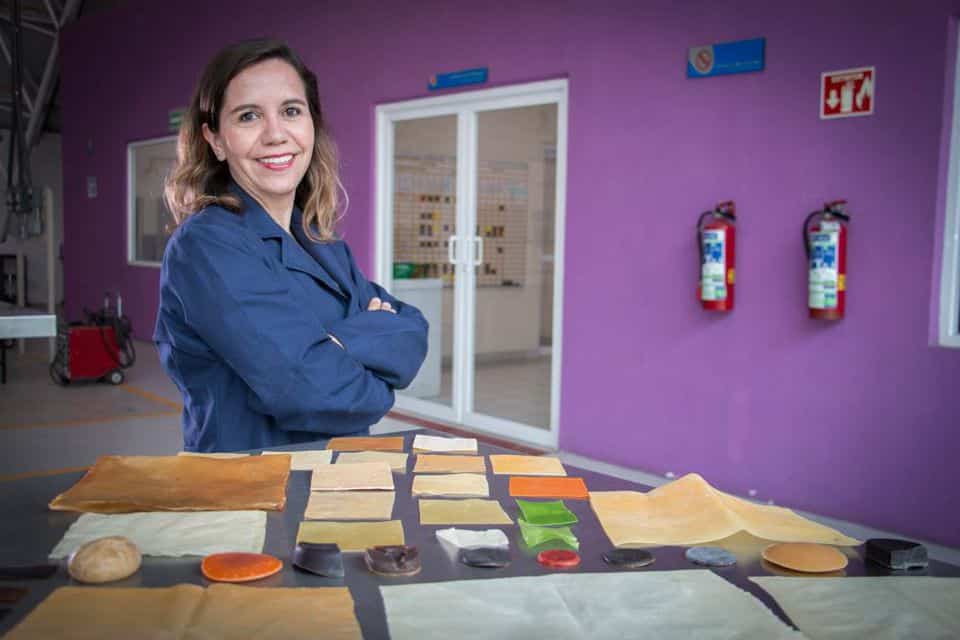
Researchers from the University of Valle de Atemajac in Zapopan, Mexico have created a biodegradable plastic from the juice of the prickly pear cactus.
The new material begins to break down after sitting in the soil for a month and when left in water, it breaks down in a matter of days. Plus, it doesn’t require crude oil like traditional plastics.
“There were some publications that spoke of different materials with which biodegradable plastics could be made, including some plants,” Sandra Pascoe Ortiz, the research professor who developed the material, told Forbes.
“In this case the nopal cactus has certain chemical characteristics with which I thought it could be feasible to obtain a polymer, that if it was combined with some other substances, all of them natural, a non-toxic biodegradable plastic would be obtained. The process is a mixture of compounds whose base is the nopal. It’s totally non-toxic, all the materials we use could be ingested both by animals or humans and they wouldn’t cause any harm.”
This means that even if any of this material made its way into the ocean, it will safely dissolve. It’s estimated that between 1.15 million to 2.41 million tonnes of plastic are entering the ocean each year from rivers. Last month, divers found a plastic KFC bag from the 1970s during an ocean clean-up off the waters off Bulcock Beach in Queensland, Australia and earlier this year, during a dive to the bottom of the Mariana Trench – the deepest point in the ocean – a plastic bag was found.
According to Ortiz, the project was born in a science Fair of the 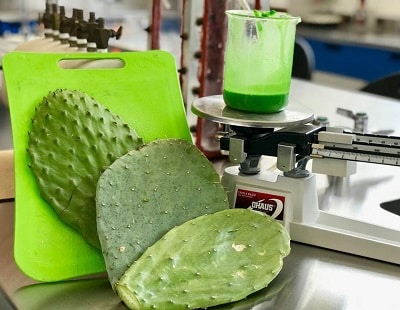 Department of Exact Sciences and Engineering, in the chemistry class with industrial engineering students of the career. They began to make some attempts to obtain a plastic using cactus as raw material.
“From that I decided to start a research project in a formal way. Currently in the project collaborate researchers from the University of Guadalajara in conjunction with the University of Valle de Atemajac.”
Continue on to Forbes to read the complete article.

The Television Academy Foundation Awards Ceremony Celebrates Student-Produced Programs From Colleges Nationwide. The submission period for the Television Academy Foundation’s 40th College Television Awards is Sept. 5 through Oct. 3, 2019.
Each year hundreds of graduate and undergraduate students, representing colleges and universities nationwide, submit their media projects to television’s most prestigious student competition—the Television Academy Foundation’s College Television Awards.
The College Television Awards honors achievement in student-produced programs and will feature stars from today’s top television shows presenting awards to winners at the red-carpet awards ceremony.
Emulating the Emmy® Awards selection process, entries for the College Television Awards are judged by Television Academy members. Top honors and a $3,000 cash prize will be presented to winning teams in eight categories: drama, comedy, animation, nonfiction, promotional, news, sports and variety. The College Television Awards also includes two additional, donor-supported, categories: the Seymour Bricker Humanitarian Award and the Loreen Arbus Focus on Disability Scholarship.
In addition to the awards ceremony, the nominees will take part in a three-day television summit hosted by the Television Academy Foundation. The summit, designed to enhance professional development, will feature panel discussions, studio tours and networking opportunities with industry executives and Academy members.
The College Television Awards often serves as an entry point for a career in television for nominees and winners. Past alumni have worked as editors, writers, producers and other positions on programs including Ray Donovan, The Handmaid’s Tale, Tom Clancy’s Jack Ryan, CBS This Morning, Unbreakable Kimmy Schmidt, Grey’s Anatomy, 60 Minutes, Empire and many more.
For additional information, visit TelevisionAcademy.com/CTA.
To read the complete article continue on to The Patch.

Race car driver Jessi Combs, who earned the title of the “fastest woman on four wheels” after she set a record with a jet-powered car, died Tuesday while trying to beat a land speed record, officials said.
Combs died Tuesday in Alvord Desert in southeast Oregon, the Harney County Sheriff’s Office said. She was 39.
“She was a brilliant & to[p]-notch builder, engineer, driver, fabricator, and science communicator, & strove everyday to encourage others by her prodigious example,” said Adam Savage, former co-host of the TV show “Mythbusters.”
Combs appeared in multiple episodes of the show, while host Kari Byron was on maternity leave. She also appeared as a host in shows such as “All Girls Garage” and “Overhaulin’.”
Combs became the fastest woman on four wheels in 2013 at the North American Eagle Supersonic Speed Challenger, when she set a record of 398 mph.
In October, Combs set a new top speed of 483.2 mph in a shakedown run.
On Tuesday, she was attempting to go faster when she crashed.
“On August 27, 2019 at approximately 4:00PM the Harney County 911 Center received a call reporting that a jet car attempting to break a land speed record on the Alvord Desert had crashed leading to one fatality,” the sheriff’s office said.
Her resume was full of firsts: the first woman to place at any Ultra4 event; the first woman to compete in The Race of Gentlemen event.
Savage also tweeted “I’m so so sad, Jessi Combs has been killed in a crash. She was a brilliant & too-notch builder, engineer, driver, fabricator, and science communicator, & strove everyday to encourage others by her prodigious example. She was also a colleague, and we are lesser for her absence.”
Her dedication to women’s empowerment in the automotive industry was also significant. She has a line of women’s welding gear with Lincoln Electric, as well as an online collaborative dedicated to empowering and educating women through industrial skills, called the RealDeal.
Continue on to CNN News to read the complete article.

By: Rochelle L. Williams, PhD, ARC Network Project Director, AWIS
The ARC Network, an initiative of the Association for Women in Science (AWIS), elevates thought leadership on the successes and challenges to realizing equity in STEM. Since 2009, AWIS has worked with the National Science Foundation (NSF) to convene ADVANCE institutions and NSF Gender in Science and Engineering (GSE) program to discuss synthesizing quantitative and qualitative approaches affecting gender composition and representation in STEM education workplaces.
By combining AWIS’ convening power and the ARC Network’s mission to advance equity in STEM, we’ve sought to create community, not another conference that promises a magical solution to research problems.
The 2019 Equity in STEM Community Convening builds on the momentum of the NSF ADVANCE/GSE Workshops, while simultaneously curating an experience that embodies a culture of innovation and inclusion. Traditional meeting features (i.e., poster sessions, networking coffee breaks and interactive breakout sessions) are infused with components that amplify, revolutionize and cultivate a community of researchers and practitioners.
To increase the reach and visibility of proven strategies that promote equity in STEM, additional avenues for authentic storytelling have been incorporated into this year’s programming. To start, presenters will stretch themselves by submitting visual abstracts, visual summaries of their presentations instead of the traditional text-based abstract. Shifting to visual abstracts allows easy distribution of their work within the ARC Network and with external audiences using social media. In addition to having prominent keynote speakers and poster showcase, the Equity in STEM Community Convening will also feature Lightning Talks during the networking reception. The Lightning Talks will challenge presenters to outline the highlights of their work and explain its importance within five minutes.
The Equity in STEM Community Convening will highlight high-quality research and works-in-progress that have potential to advance and transform STEM workplaces. The Early-Stage Innovations sessions will support new researchers and practitioners looking to share the initial phase of their work or seeking feedback from the community. Experience Reports, sessions dedicated to those on the frontline of change, are designed for well-developed and/or later-stage initiatives or research.
We’ve also introduced a new priority area, ADVANCE to Market. Presentations will center on research, programs, and practices that discuss academic STEM entrepreneurship and commercialization, including social equity issues and taking diversity and inclusion research and resources to market.
Advancing equity in STEM requires an intentional focus on creating authentic, sustainable and inclusive environments while simultaneously cultivating a community that collaborates, shares and implements promising practices and tools shown to affect change. Presenter-designed Symposia and Workshops are meant to give participants the time to reflect and create, both individually and with others. The informal setting of the Networking Breaks make way for relaxed exchanges that are crucial for the learning process.
In a world with too many conferences, too many broken promises and not enough time, you’ll leave the convening inspired to take your work to the next level and, more importantly, knowing there’s a community ready to support you in your efforts toward #EquityinSTEM.
Join the ARC Network Community! This AWIS initiative connects scholars and practitioners committed to equity in STEM at no cost. In collaboration with Mendeley, the ARC Network hosts a dedicated online group for members to access and contribute to a rich library of curated resources – including reports, articles, datasets, toolkits, videos and more – that serve as an important part of systemic change efforts. As the go-to hub for community collaboration, the platform also offers members the opportunity to share events hosted by the community and their institutions as well as online learning opportunities, such as webinars and virtual workshops. There is no cost to register. AWIS Membership not required.
Equity in STEM “First Look.” Published on SSRN, this quarterly digest allows peers to share a wide range of STEM equity content and early stage research, empowering the community with early access to the tools and knowledge needed for change. The inaugural publication provides a historical perspective of the NSF ADVANCE program and outcomes of and lessons learned from past awardees.
Rochelle L. Williams, PhD, is Project Director for the ADVANCE Resource Coordination (ARC) Network for AWIS. The ARC Network has a primary focus on organizational and institutional systemic change from both the research and practical perspectives. Before joining AWIS, Dr. Williams served as Research Scientist in the Office for Academic Affairs at Prairie View A&M University. Since 2012, Dr. Williams has worked as a subject-matter expert for the National Science Foundation on issues about cultures of inclusion, broadening participation, and university education programs. Dr. Williams received a Bachelor of Science in Physics from Spelman College and both a Master of Engineering in Mechanical Engineering and Doctorate in Science and Mathematics Education from Southern University and A&M College.
AWIS is a global network with 80 grassroots chapters and affiliates connecting more than 100,000 professionals in STEM with members, allies and supporters worldwide. Founded in 1971, AWIS has been the leading advocate for women in science, technology, engineering, and mathematics (STEM) to achieve business growth, social change, and innovation. We are dedicated to driving excellence in STEM by achieving equity and full participation of women in all disciplines and across all employment sectors.
Funded by the National Science Foundation ADVANCE Program, Award HRD-1740860, the ADVANCE Resource and Coordination (ARC) Network seeks to achieve gender equity for faculty in higher education science, technology, engineering, and mathematics (STEM) disciplines. As the STEM equity brain trust, the ARC Network recognizes the achievements made so far while producing new perspectives, methods and interventions with an intersectional, intentional and inclusive lens. AWIS serves as the backbone organization of the ARC Network.

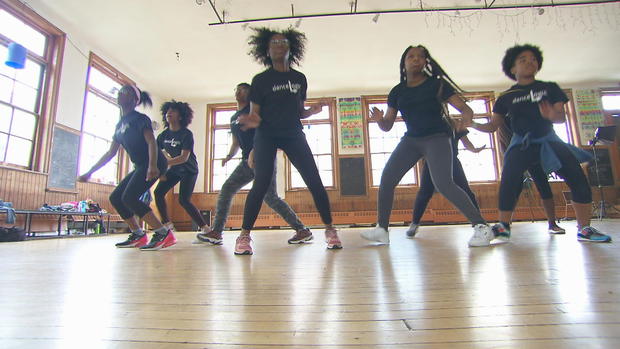
Numbers, stats and creativity are all integral parts of choreography — but they’re vital for coding, too. That’s the idea behind danceLogic, a program in Philadelphia that integrates dance and computer programming for 13 to 17-year-old girls.
“With dancing, you have to look at the steps and figure out how do they fit into one another. Same with coding,” said 14-year-old Nailah Shabazz, adding “basically, if I see myself coding and helping others, I think I can also bring in other people who look like me, to also want to pursue that field.”
For 14-year-old Lauryn Dorsett, the dancing part came easy – the coding, not so much. “The coding part is sorta hard at first when you think about it,” Dorsett said. “But once you really grow into it, and stay with it for a while, it starts to get easier.”
When she realized how much money she could potentially make with the skills, Dorsett said, she was even more intrigued. “Not all fields offer the same type of opportunities,” she said. “You can get far with this.”
Franklyn Athias believes that opportunity is everything. While working as a senior vice president at Comcast, Athias started danceLogic in 2018.
Originally, Athias only planned to focus on coding – but “he had trouble getting [kids] to participate,” according to his friend and co-founder Betty Lindley.
Lindley, who runs a cultural center, suggested he incorporate dance.
Athias wants people who might be intimidated by the math and science behind coding to understand that it’s like any other skill. “It’s always hard in the beginning,” he said. “This is why the dance part is so important, because a lot of young ladies came in and could not dance. But they practice.”
That’s what happened with Shabazz, who said she “inherited two left feet” from her father. “If I have the confidence to dance in front of a bunch of people and not be afraid of making mistakes, then I have the confidence to accomplish whatever goals I have in life,” she said.
“Something they thought was hard now became easy, right?” Athias said. “And it was all because of practice. It wasn’t anything else besides, ‘let’s try it, let’s get it wrong, let’s try it again and then boom.’ The smile comes on your face and say, ‘I got it, Mr. Franklyn.’ When that happens, he said, “the world is theirs.”
Athias wants danceLogic to help give back to the community. “I came from a very rough neighborhood, and someone introduced me to something that kept me out of trouble,” he said. “If I can help motivate some other person to do the same thing that’s the reward I get outta this.
When the girls finish the 14-week program, they’re rewarded too. Athias gives them iPads, so they can keep coding – he has no doubt they’ll keep dancing.
DanceLogic costs $50 total for the 14 weeks. The West Park Cultural Center, which runs the program, says it will never turn away anyone who can’t afford the cost. The center offers scholarships, too.
Continue on the CBS News to read the complete article.


Once an independent print shop, Minuteman Press in Leesburg is now a full-service Minuteman Press design, marketing, and printing franchise.
The Minuteman Press franchise in Leesburg, Florida is in good hands with Susan Olsen. Susan brings with her a 20-year retail career and a passion for helping others and getting involved in the community. Susan says, “We are a full service, locally owned and operated print and marketing center. We offer everything from offset/digital printing in-house to all types of promotional products that you can imagine. We are fast and friendly, and we are here to help you create and design anything you need to help your business grow.”
Like many people who felt stuck in their careers, Susan decided to become her own boss. She says, “My last job was as a General Manager at Staples. I got tired of making money for other companies and decided it was time to do my own thing.” Susan was able to take full advantage of Minuteman Press International’s conversion program and buy an independent print shop that is now her full-service franchise in Leesburg.
Why Minuteman Press? Susan explains, “It is really funny how it happened actually. I was horseback riding with a friend and talking about how I just wanted something different and was not really happy with my current job. We were talking about different things I could do and I told her my favorite part of Staples was the print and marketing. I was at home the next day looking at franchises for sale online and Minuteman Press popped up. I contacted Minuteman Press International and my Regional Vice President Jeff Robey reached out to me. He arranged for me to speak with other franchise owners right away. Talking to them got me more motivated and to dig deeper about the company. It has been a great experience from the beginning. I love the customers we service. I love the industry and I love how there is something different every day.”
Taking over an existing business means that Susan has hit the ground running and jumped right into helping her clients. Susan says, “The most rewarding thing to me is being able to come to work every day and plan out what I think are the priorities, meeting the customers when I am out in the field, and meeting other business owners through the different organizations I am in. I am in the local BNI and the Chamber of Commerce. I love volunteering and helping out in the community.”
Since Susan is a new business owner with no prior experience, she credits Minuteman Press with giving her a new career path that helped her become comfortable with becoming an entrepreneur. She concludes, “I went with owning my Minuteman Press franchise instead of buying a small mom and pop shop because I love the fact that I have their ongoing support. I believe there are a great deal of benefits to being with the Minuteman Press franchise as they continue to help me as I help my clients.”
Susan Olsen’s Minuteman Press franchise is located at 1417 E. Main St., Leesburg, FL 24748. For more information, call Susan and her team at (352) 728-6333 or visit their website: leesburg-fl.minutemanpress.com
Click here to learn more about how to sell your independent printing business with the help of Minuteman Press International.
About Minuteman Press International
Minuteman Press International is the number one rated business marketing and printing franchise that offers world class training and unparalleled ongoing local support. Started in 1973 by Roy Titus and his son Bob, Minuteman Press began franchising in 1975 and has grown to nearly 1,000 business service franchise locations worldwide including the U.S., Australia, Canada, South Africa, and the United Kingdom. Minuteman Press is ranked #1 in category by Entrepreneur 28 times and 16 years in a row, including 2019. Independent franchisee satisfaction firm Franchise Business Review has also named Minuteman Press International to its 2019 Top Franchises, 2018 Top Franchise Leaders, Top Franchises for Women, and Top Franchises for Veterans lists thanks to positive reviews from our owners.
At Minuteman Press, We Are The Modern Printing Industry™ providing high quality products and services that meet the needs of today’s business professionals and go way beyond ink on paper. Today, our centers offer innovative branding solutions and produce custom designs, promotional products, branded apparel, direct mail marketing, large format printing (banners and posters), signs and graphics, and much more. Prior experience is not necessary to own and operate a successful Minuteman Press franchise.
To learn more about #1 rated Minuteman Press franchise opportunities and speak with one of our experienced franchise representatives at no obligation, call 1-800-645-3006. Continue your franchise research, watch exclusive owner videos and access Minuteman Press franchise reviews at minutemanpressfranchise.com


Google is pleased to announce the addition of 6 new media literacy activities to the 2019 edition of Be Internet Awesome. Designed to help kids analyze and evaluate media as they navigate the Internet, the new lessons address educators’ growing interest in teaching media literacy.
They were developed in collaboration with Anne Collier, executive director of The Net Safety Collaborative, and Faith Rogow, PhD, co-author of The Teacher’s Guide to Media Literacy and a co-founder of the National Association for Media Literacy Education. Because media literacy is essential to safety and citizenship in the digital age, the news lessons complement Be Internet Awesome ’s digital safety and citizenship topics.
Overview of new activities:
1. Share with Care: That’s not what I meant!
● Overview: Students will learn the importance of asking the question: “How might others interpret what I share?” They’ll learn to read visual cues people use to communicate information about themselves and to draw conclusions about others.
2. Share with Care: Frame it
● Overview: Students will learn to see themselves as media creators. They’ll understand that media makers make choices about what to show and what to keep outside the frame. They’ll apply the concept of framing to understand the difference between what to make visible and public online and what to keep “invisible.”
3. Don’t Fall for Fake: Is that really true?
● Overview: Students will learn how to apply critical thinking to discern between what’s credible and non-credible in the many kinds of media they run into online.
4. Don’t Fall for Fake: Spotting disinformation online
● Overview: Students will learn how to look for and analyze clues to what is and isn’t reliable information online.
5. It’s Cool to Be Kind: How words can change a picture
● Overview: Students will learn to make meaning from the combination of pictures and words and will understand how a caption can change what we think a picture is communicating. They will gain an appreciation for the power of their own words, especially when combined with pictures they post.
6. When in Doubt, Talk It Out: What does it mean to be brave?
● Overview: Students will think about what it means to be brave online and IRL, where they got their ideas about “brave” and how media affect their thinking about it.
Expanding resources to families
YMCA
We teamed up with the YMCA across six cities to host bilingual workshops for parents to help teach families about online safety and digital citizenship with Be Internet Awesome and help families create healthy digital habits with the Family Link app. The workshops, designed for parents, coincide with June’s National Internet Safety Month and come at the start of the school summer holidays.