







This past weekend, the United States made history when Elon Musk’s SpaceX launched the Dragon Crew capsule into space, the first U.S. mission from U.S. soil since 2011. SpaceX is primarily associated with Musk, as he was the founder of the company, but many people don’t know about the company’s president and chief operating officer, Gwynne Shotwell.
Now responsible for SpaceX’s operations and growth, Shotwell has been working with SpaceX since the company was founded in 2002 and was immediately put on the board of directors. She earned her bachelor’s and master’s degree in Mechanical Engineering and Applied Mathematics from Northwestern University and previously worked with The Aerospace Corporation and Microcosm Inc. in El Segundo, California. Wanting to apply her skills in engineering in a hands-on environment, Shotwell worked with The Aerospace Corporation in military space research, technical work, spacecraft design and thermal analysis. She spent much of her time specifically studying small spacecraft design and how to navigate such a spacecraft in and out of the cosmos. She later went on to work Microcosm Inc, a rocket building company, where she oversaw business development.
Having both the skills and knowing the ins and outs of spacecraft and business, Shotwell’s expertise at SpaceX still stands. Under her supervision, SpaceX has launched five billion dollars’ worth of crafts with the Falcon vehicle family and has now become the first privately owned business to send astronauts into space. Additionally, Shotwell recently became a member on the board of directors for Polaris, an automotive vehicle manufacturing company, and serves in many STEM-related programs. Her work in these areas have earned her several awards, including a spot in the 2012 Women in Technology Hall of Fame and as one of Forbes’ Magazine’s Top 50 Women in Tech.
Through all of her successes, it seems as if Shotwell has more large-scale accomplishments to come. As part of a multi-billion dollar deal with NASA, SpaceX will continue to work on a transportation system to take the first humans to Mars.


Elon Musk, Steve Jobs, Bill Gates, Mark Zuckerberg – there are so many male leaders in tech. But what about Ada Lovelace, Grace Hopper, Susan Wojcicki, Sheryl Sandberg and the decades of further women technologists?
Women are making an impact in technology, but the statistics are still shocking. According to the Women and Technology Study conducted for PwC in 2017, only 3 percent of women say a career in technology is their first choice, 78 percent of students can’t name a famous woman working in technology, and only 5 percent of jobs in the technology industry are held by women.
Luckily, times are changing, and more women are being encouraged to join the ranks of innovators and creators driving remarkable technological innovations for our world.
Tech is a very cool industry for women to work
So why should women choose to work in technology?
Technology is a modern industry with a modern workplace culture. Think of all the perks at tech giant Google—free food, on-site massage therapists, dedicated volunteering time, and dog-friendly offices. But it’s not just about the physical benefits.
Emma Yang, CEO and founder of the mobile app Timeless
A career in technology means working with diverse people who are some of the brightest and most innovative minds in the world.
Working in the technology sector can mean working on some totally out-of-this-world, near-on futuristic projects that can help millions of people globally. Being part of something bigger and making a long-lasting and tangible difference to society is very appealing.
Of course, one of the biggest reasons why the technology sector can be so luring is its rapid rate of growth. With every new and exciting development comes many opportunities for women to get involved.
The technology sector is always hiring, and here are some of the key types of projects you could work on:
Robotic intelligence
Ever dreamed of a robot cooking you dinner? Time to wake up into this reality: robots are becoming more intelligent, more dexterous, and more adaptable to their environment.
Dactyl is a robot created by OpenAI – non-profit brainchild of tech leader Elon Musk – who can hold things with its fingers and learn to do tasks beyond its programming.
Brain-computer interface
Watching a series on the computer can even see the effort of reaching for the mouse to click the next episode an aspect of the past.
Development of a brain-computer interface is underway – a very futuristic but very possible technological development where thoughts can control the computer.
Another Elon Musk startup, Neuralink, has already developed a system where a monkey has successfully controlled a computer with its brain. The company has been considering rolling out the system for humans to help with brain and spinal cord injuries.
High-speed internet
Internet has become a staple part of many people’s lives, which means we’re expecting more and more from it. One frustration is slow internet, but innovators are solving that problem too with 5G. High-speed internet is great for individuals, and for the economy also via boosting businesses, increasing working efficiency, and making communication easier and more reliable - particularly for remote workers.
Driverless cars
So, it’s not quite the sci-fi utopia of flying cars, but technology companies are developing driverless cars powered by artificial intelligence.
It’s a mammoth task to take on – mimicking complex human actions and reactions, scaling the product to make it affordable to the mass-market – but many technology companies are determined to bring this to streets of the future.
Plant-based, meat-free food
Technology is often mainly associated with computers, devices and further hardware but technological progress can also be seen in other types of products – and can even impact of people’s lives, such as their diets. Thankfully, many people have become far more environmentally conscious and the technology industry is responding to this via a wide range of plant-based, meat-free options that are lab-grown or even 3D printed.
What’s more, plant-based meat-free alternatives can be very nutritionally optimized and personalized through technology so as to suit the health needs of individuals, and products can be mass-produced without a huge environmental impact – a big step towards alleviating the food crisis worldwide. Better for health, and better for the planet.
Personalized cancer vaccines
As well as food, technology can also revolutionize health. One incredible leap forward for human progress is custom cancer vaccines where treatment triggers someone’s immune system to find and destroy the cancer itself.
This is truly what working in technology is all about – developing new innovations that can save lives and change the world for the better.
Two women who are leading the way in creating these sorts of pioneering technological innovations are:
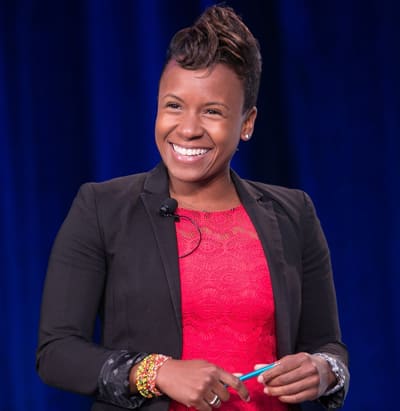
Stephanie Lampkin, founder and CEO of Blendoor – a mobile job matching app that uses a blind recruiting strategy to overcome unconscious bias and diversify recruiting in tech companies. A 13-year career with technology companies like Lockheed, Microsoft, and TripAdvisor has familiarized Lampkin with the difficulties of ‘looking different.’ With the help of technology and data, her aim is to prove that diversifying the tech talent pipeline will add, rather than remove, value to the industry.
And Emma Yang, CEO and founder of Timeless, a mobile app that helps Alzheimer’s patients stay engaged and connected to loved ones. She is a keen coder and an advocate for women in STEM. Through her work, she wants to encourage further young women like her to pursue careers in the technology industry and use their talents to make the world a better place.
Making space for women in STEM
With such rising demand for new technology, there is a significant need for women to be better supported in pursuing a career in STEM. Educators, businesses and individual mindsets must be broadened if barriers are going to be broken, stereotypes challenged and obstacles overcome to regarding women’s participation in and contribution to innovation.
We need more coding clubs in schools. We need more female role models and mentors. We need to overcome gender bias in the workplace. Companies also need to provide a more flexible work environment for women, such as programs to support women returners or better maternity leave policies.
We need more women in technology. Period.
Source: internationalwomensday.com


According to Gallup, bad managers cost businesses billions each year, and account for at least 70% of variances in employee engagement scores. Having a highly successful business manager is crucial to the overall success of a company.
The problem, however, is that not everyone knows what type of habits effective managers have. By being able to identify what those habits are, businesses can take action to find the right people to fill the position, and managers can boost their productivity and increase their efficiency.
“There is always room for improvement, no matter how great of a manager you are,” explains Leon Goren, president and chief executive officer of PEO Leadership. “The good news is that making those improvements can often be simple. It’s just a matter of taking the steps to make it happen, to incorporate new habits that will lead to better outcomes.”
When managers take action to create effective habits, they see positive results in the overall success of their business. Here are some of the habits of highly successful business managers and how to nurture them:
“It may seem overwhelming for someone to start laying the foundation to create numerous new habits all at once,” says Goren. “The best way to start is by selecting one thing to work on at a time. Once you have a good handle on it, move on to the next habit you’d like to incorporate. Before you know it, you will have many of these down, and it will be smooth sailing.”
PEO Leadership offers an executive leadership community that represents over 100 business leaders, successful entrepreneurs, and top executives. Its services include peer advisory boards, executive advisors/coaches, community connections, strategic business advice, an annual world-class leadership conference, and thought leadership events including PEO Leadership’s “The Way Forward” live webcast and podcast. The company is owned by Leon Goren, who has over 25 years of leadership experience.
PEO Leadership offers leadership advisory services in six categories, including for Presidents/C-suite executives of large national and multinational organizations, entrepreneurs of large national and multinational companies, global executives, small business entrepreneurs, senior executives, and businesses in transition. There is a 60-day free trial Leadership Bootcamp available. To get more information or obtain a free trial, visit the site at: https://peo-leadership.com.
About PEO Leadership
PEO Leadership is a Canadian peer-to-peer leadership advisory firm that has been the destination for business leaders to regularly meet and discuss important issues, solve problems and explore new opportunities since 1991. The organization provides a safe and highly confidential environment, with PEO Executive Advisors, who facilitate stimulating and astute dialogue to leverage the collective experience, creativity, intellect and wisdom of the Peer Advisory Board and the PEO Leadership Community at large. They support, cultivate and accelerate business leaders’ leadership excellence to achieve great impact through the organizations they lead, the communities they serve and the lives they live. Current members include Umbra, Miele, Crayola, ThinkOn and Nestle. For more information about the company and services, visit the site at: https://peo-leadership.com.


Our recent report on chief sustainability officers (CSOs) in the U.S. revealed that women went from holding 28 percent in 2011 of the CSO positions to 54 percent in 2021. That’s a 94 percent increase.
It’s a positive development to see the playing field level for women in sustainability, but what’s driving this trend? And what are the implications for women’s leadership in business more broadly? Before diving into those questions, it’s interesting to look at the trends in gender and leadership in sustainability and business.
The state of women’s leadership in sustainability
When it comes to women’s leadership as CSOs, the biggest jump happened between 2013 and 2014, when the number of women went up by 11 percentage points. There was another significant increase between 2018 and 2021, around the time the #MeToo movement gained momentum. In 2020, when more companies than ever hired their first CSO, female CSOs broke the 50 percent mark to reach their current status.
Outside of sustainability, women in business have not advanced as quickly. In the C-suite, men still far outnumber women. According to a Morningstar report looking at data from 2019, women hold only 12.2 percent of named executive officer roles at companies, up just 2.8 percentage points from 2015. The report authors noted that “this reflects a rate of growth that would only deliver equal representation sometime in the second half of this century.”
3 reasons women in sustainability are moving up
I can surmise three reasons women are advancing faster in sustainability than they are in business more broadly.
1. There’s a robust pipeline of women vying for these roles.
According to the 2020 GreenBiz State of the Profession report, which my firm sponsors, the percentage of women holding any sustainability position has been steadily rising since 2010. Between 2011 and 2020, the percentage of women holding a vice president role grew from 31 percent to 51 percent. The pool of female directors grew by 18 percentage points, from 37 percent to 55 percent. And the percentage of female managers in sustainability roles has gone up the most, from 39 percent to 63 percent. By contrast, the Morningstar authors pointed to the “broken rung” at major corporations, in which “women are systematically passed over being offered their first and crucial career promotion.”
Based on the GreenBiz data and my experience as a recruiter, I believe this is not happening in sustainable business roles, where there’s a deep talent pool of women, starting at the manager level and steadily making their way up the ranks.
2. Women excel in these roles.
As I have written about before, research suggests that women are well-suited to succeed in sustainability roles. A 2018 Business and Sustainable Development Commission report argued that women have the necessary leadership qualities to take on sustainable development, and they have the desire to address social and environmental challenges.
In my work, I have also found the “feminine” traits such as the ability to collaborate, translate complex issues and demonstrate humility help CSOs succeed. CSOs are not in it for the ego boost; they find it more fulfilling to champion others, praise generously and inspire others to support a vision for the future that benefits all.
3. The path to sustainability leadership is inclusive.
Unlike other C-suite positions, there’s no specific set of credentials that CSOs are required to have, so the path to leadership can be more varied. Moreover, sustainability is, by nature, an inclusive field. The job requires engagement with diverse stakeholders, so it makes sense that hiring managers would seek out people with diverse experience and backgrounds. However, while this has led to gender diversity, it has not yet supported racial diversity: Only 16 percent of U.S.-based sustainability professionals today identify as a race other than white.
Is this trend good or bad for women?
I have many anecdotes pointing to executive leadership clarifying their preference for a woman to hold their CSO position. It made me wonder: Is this trend going to create a pathway for female leadership in business? Or are women being pigeonholed in sustainability?
While the Morningstar report authors noted that women in business face a “glass wall” blocking them from career tracks with room for advancement and higher pay, it’s my belief that gender parity in the CSO role is a good thing. With the growing importance of ESG at global companies, the women in the CSO role have great potential to influence the future of business.
Moreover, women have the skills to excel in these roles. Whereas in business generally there’s the “glass cliff” phenomenon — whereby women are promoted into leadership positions during a crisis and then blamed when they fail — my sense is that women’s aptitude with communication, influence and agility will help them succeed in the CSO role.
Click here to read the full article on Green Biz.


By Tshiamo Mobe, Global Citizen
Climate change is an issue that affects everyone on the planet but women and girls are the ones suffering its effects the most. Why? Because women and girls have less access to quality education and later, job opportunities. These structural disadvantages keep them in poverty. In fact, women make up 70% of the world’s poor. In a nutshell, climate change impacts the poor the most and the poor are mostly women.
Poverty is driven by and made worse by climate change also makes girls more susceptible to child marriage, because it drives hunger and girls getting married often means one less mouth to feed for their parents. Climate change also leads to geopolitical instability which, in turn, results in greater instances of violence — which we know disproportionately impacts women and girls.
Ironically, saving the planet has been made to seem a “women’s job”. This phenomenon, dubbed the “eco gender gap”, sees the burden of climate responsibility placed squarely on women’s shoulders through “green” campaigns and products that are overwhelmingly marketed to women.
There are several hypotheses for why this is. Firstly, women are the more powerful consumers (they drive 70-80% of all purchasing decisions). Secondly, they are disproportionately responsible, still, for the domestic sphere. And finally, going green is seen as a women’s job because women’s personalities are supposedly more nurturing and socially responsible.
Women should be involved in fighting the climate crisis at every level — from the kitchen to the science lab to the boardroom. Ruth Bader Ginsburg explained it best when she said: “Women belong in all places where decisions are being made.” However, women are underrepresented in the science field (including climate science), with just 30% of research positions held by women and fewer still holding senior positions. The Reuters Hot List of 1,000 scientists features just 122 women.
Click here to read the full article on Global Citizen.


Originally posted on Hispanic Executive
There are countless Latina influencers out there who have cultivated passionate followings on social media, but it takes a special type of influencer to build both a brand and a business.
And here at Hispanic Executive, we love nothing better than celebrating entrepreneurship.
Meet the Latina business influencers who are transforming their communities—and the world itself.
1. Ada V. Rojas, CEO and Founder, Vecina Couture
Ada V. Rojas is a mission-driven entrepreneur: all of her business efforts have reflected her desire to celebrate her Dominican American heritage and uplift other ambitious women. Her latest endeavor is Vecina Couture, a luxury loungewear line that’s been spotlighted by Oprah Daily, Essence, Refinery29, and other top outlets.
2. Paola Alberdi, Founder and Creative Director, Blank Itinerary
Paola Alberdi knows fashion. She’s worked with the likes of Chanel, Dior, Gucci, Coach, and Dolce & Gabbana, not to mention lifestyle and beauty brands like Sephora and Givenchy Beauty.
Today, the Mexican American serves as founder and creative director of Blank Itinerary, a bilingual fashion and lifestyle platform that’s earned Alberdi recognition from Forbes, Vogue México, and Harper’s Bazaar.
3. Julie Sariñana, Founder, Color Dept.
Julie Sariñana created clean nail care company Color Dept. to be a one-stop shop for nail art aficionados “who love to be different.” All Color Dept. products feature bold, vibrant colors and are made with wheat, potato, manioc, and corn rather than chemicals and plastics.
In addition to her work with Color Dept., Sariñana runs a popular fashion blog called Sincerely Jules.
4. Julissa Prado, Founder and CEO, Rizos Curls
Afro-Mexican Julissa Prado spent years fighting her curly hair. She was never happy with how it looked, and she never found any hair products that helped.
In the years since then, she’s not only embraced her hair but created a clean, high-quality line of products designed for all curl types. Prado and Rizos Curls have been featured in People en Español, PopSugar, and Forbes.
5. Cyndi Ramirez, Founder and CEO, Chillhouse
A serial entrepreneur with a background in fashion, marketing, lifestyle branding, and hospitality, Cyndi Ramirez has been featured by Refinery29, Martha Stewart Magazine, theSkimm, and Hispanic Executive.
Her latest venture, Chillhouse, is a “multi-point retail concept” that has revolutionized the spa world. Chillhouse offers a wellness-focused self-care experience that includes a workspace, nail art studio, and massage boutique—a true getaway for those in need of deep relaxation.
5. Camila Coelho, CEO and Founder, Camila Coelho Collection
Beauty and fashion influencer Camila Coelho has not one but two businesses: her eponymous clean clothing line Camila Coelho Collection and a clean beauty brand called Elaluz. Her entrepreneurial spirit has earned her features in both Elle and Forbes.
The Brazilian American is also passionate about destigmatizing neurological disorders—she’s been battling epilepsy since the age of nine.
6. Irma Martinez, Founder and Creative Director, Trendy Inc.
A true icon in the fashion world, Ima Martinez has worked with celebrities like Sofia Vergara, Ricky Martin, Shakira, and Enrique Iglesias, to name but a few. Her company, Trendy Inc., specializes in lifestyle services for the production and entertainment industries. Martinez also offers advisory and coaching services as well as courses on the business of personal shopping and styling.
Read more about her career in Hispanic Executive, People en Español, the Miami New Times, and Poder magazine.
1. Eva Hughes, Founder and CEO, Adira Consulting
Eva Hughes was a huge name in the luxury and media spaces—she served as editor-in-chief of VogueMéxico y Latinoamérica and as CEO of Condé Nast México y Latinoamérica—before she struck out on her own in January 2018. Her company, Adira Consulting, offers brand strategy advice to clients that primarily come from the luxury sector. She also offers group and individual coaching services.
As noted in her Hispanic Executive feature, Adira is Hebrew for “strong, noble, powerful.”
2. Victoria Jenn Rodriguez, Founder, Dare to Leap Academy
Victoria Jenn Rodriguez is a business coach and serial entrepreneur who left her high-powered career in the corporate world to start a company of her own.
Her newest business is called the Dare to Leap Academy: it’s an online learning platform where Rodriguez teaches other women how to leave corporate America behind to follow their passions—without giving up their financial stability. Learn more about her in her Hispanic Executive story.
1. Michelle Lewin, Founder, One0One
Venezuelan American Michelle Lewin is one of the biggest names in the fitness world: she is a model, bodybuilder, and cover star for magazines like Oxygen, Playboy, and Muscle & Fitness Hers.
Lewin is also an entrepreneur. She sells health supplements, clothing, and gym accessories and equipment through her website and has her own personal training app.
Continue on to Hispanic Executive to view the full list.


By Yvette Montoya
When we consider the state of the United States in 2022 both socially and economically, it’s clear that our demographic is shifting and that Americans believe that social responsibility is more important than ever.
Companies that want to stay relevant in this economy need to prioritize diversity, equity and inclusion (DEI) programs and initiatives. A 2017 Cone Communications CSR study stated that 87 percent of consumers would purchase a product that aligned with their own values, and 76 percent would boycott a brand if it supported an issue that went against their beliefs. So, it’s a good time for companies to evaluate what their corporate social responsibility (CSR) looks like and where it needs improvement.
There are four types of corporate social responsibility: Environmental, philanthropic, ethical and economic responsibility- and supplier diversity programs have the potential to achieve all four categories. In a world that’s increasingly looking to employers to create stability and treat employees fairly, supplier diversity programs not only give companies a competitive edge but also make them more likely to maintain high standards of ethics. Implementing diversity, equity and inclusion (DEI) positions businesses to create a positive experience for employees, vendors and the community at large.
Here are three reasons why every company should take supplier diversity programs seriously:
Companies that choose to focus intentionally on investing in Black and Latinx, women-owned, and LGBTQ+ businesses build trust with their customer base and inspire other business leaders to examine their own company practices. When we create transparency related to how products are sourced and/or hiring and management practices, we put our money where our mouth is, and so will your customers. According to Cone Communications, three out of five Americans believe that companies should spearhead social and environmental change. And eighty-seven percent of Americans said they’d buy a product because a company advocated for an issue they care about.
Although there may be some challenges in finding minority-owned vendors that comply with a buyer’s procurement requirements, there are two solutions to this. One being creating mentoring and training programs for diverse suppliers to help them meet the standards of the certification process. The other is to partner with relevant councils and chambers of commerce that provide these support systems. When value is created through tangible solutions, everyone wins.
Treating DEI like an option or something that isn’t deserving of attention means that customers will see that you’re not taking your CSR seriously. Corporate social responsibility initiatives can be the best public relations — as well as marketing — tool. Gen Z and Millennials are experts at spotting inauthenticity. A company that positions authentically with real company-wide efforts and accountability will be viewed favorably in the eyes of consumers, investors and regulators. Honest initiatives attract opportunities and employees that match an organization’s convictions.
CSR initiatives can also improve employee engagement and satisfaction — key measures that drive retention. Finally, corporate social responsibility initiatives by nature force business leaders to examine practices related to how they hire and manage employees, source products or components and deliver value to customers. All of these things create happy employees and customers, which lead to innovation, sales and a good reputation.
Supplier diversity programs are a catalyst for true social impact because thriving small businesses are the lifeblood of the American economy. Strong local businesses create jobs and higher wages, which put money back into the community and drive economic growth. Another plus of supplier diversity is the impact it will have on the company at large and the economy overall. Supplier diversity promotes healthy competition by increasing the pool of possible suppliers. This can lead to potentially lower costs and a better product quality. Not only that, bringing in people from different backgrounds or from backgrounds that reflect the community your company serves can result in better marketing, unique solutions to old problems, as well as innovative ways to meet your customer’s needs.
With midterm elections underway, it’s a good idea for businesses to be on the right side of key issues, including racial and gender equality and environmental sustainability. This gives corporations the opportunity to work collaboratively with businesses in a way that combats racial discrimination, all while empowering the public, creating economic opportunity and enhancing their business.
Yvette Montoya is a Los Angeles native and journalist who is equal parts content creator and writer. She covers everything from issues of spirituality and politics to beauty and entertainment. Her journalistic work has been featured on Refinery29, Teen Vogue, ArtBound, HipLatina, Mitu, and she’s a regular contributor for POPSUGAR.


As 2022 comes to a close and the New Years’ resolutions start to flow, you may have “Pursue a New Career” as one of your 2023 goals.
The STEM field is growing now more than ever with jobs in every sector of science, technology, engineering, arts and design and mathematics. Here are the top jobs in the STEM field going into the new year:
Bioengineers and Biomedical Engineers
Bioengineers and biomedical engineers combine engineering principles with sciences to design and create equipment, devices, computer systems and software. They are usually responsible for designing and operating medical equipment and devices such as artificial organs, prosthetic limbs and diagnostic technology. The bioengineering field is one of the highest “in-demand” jobs currently. They are currently estimated to grow at about 10 percent, a much higher rate than average.
Physicists
Physicists study the interactions of matter and energy. Theoretical physicists and (including astronomers) may study the nature of time or the origin of the universe. They typically work on research teams to conduct research and experiments about the natural world, but they also work to design and create lasers, telescopes and other scientific equipment that will aid them in their research. Not only are jobs in this field in high demand, growing at about 8 percent, but are one of the highest paid jobs in the STEM field today.
Computer and Research Information Scientists
Computer and information research scientists design innovative uses for new and existing technology. They study and solve complex problems in computing for business, science, medicine etc. and have a profound knowledge in programming, complex algorithms and robotics. Many of their day-to-day tasks consist of research, computer work, team collaboration and experimentation. Jobs are growing at a little over four times the normal rate compared to average, with a whopping 21 percent increase.
Software Developers
Software developers create the computer applications that allow users to do specific tasks and the underlying systems that run the devices or control networks. They typically work with cliental to assess the company’s current programming and computer systems and work to create systems that are more efficient and helpful to their needs. They can also be responsible for the creation, development and functionality of computer programs and systems. Software development is a rapidly growing industry with a 25 percent outlook.
Information Security Analysts
Information security analysts plan and carry out security measures to protect an organization’s computer networks and systems. They are heavily involved with creating their organization’s disaster recovery plan, maintaining software, monitoring networks and fixing potential and confirmed program threats. They must also keep up to date on the latest news and developments surrounding the tech field. IT Analysts are one of the fastest growing fields in the STEM field at 35 percent.
Sources: Bureau of Labor Statistics, Oak Ridge Institute for Science and Education, NBC


In a world that’s constantly changing, finding a career that offers job security and steady finances in a growing market can be tremendously comforting. If you’re looking for the best field to pursue, here are some top jobs offering high salaries and exceeding the expectations of the job market. Note: The average growth percentage for any career is eight percent.
Computer and Information Systems Managers
Description: Computer and information systems managers, often called information technology (IT) managers or IT project managers, plan, coordinate and direct computer-related activities in an organization. They help determine the information technology goals of an organization and are responsible for implementing computer systems to meet those goals. Typical job duties associated with this position are analyzing technology needs within companies, computer maintenance, cyber-security and keeping up to date with the latest technology trends.
Education Requirements: Computer and information systems managers typically need a bachelor’s degree in computer and information technology or a related field, such as engineering technologies. Many organizations also require their computer and information systems managers to have a graduate degree. A Master of Business Administration (MBA) is common and takes two years beyond the undergraduate level to complete.
Average Annual Salary: $159,010 per year
Job Growth Outlook: 11 percent
Human Resources Managers
Description: Human resources managers plan, coordinate and direct the administrative functions of an organization. They manage the recruiting, interviewing and hiring of new staff, consult with top executives on strategic planning and serve as a link between an organization’s management and its employees. Their duties can entail coordinating an organization’s workforce to best suit employees, designing and overseeing employee benefit programs and handling staffing issues, such as mediating disputes and directing disciplinary procedures.
Education Requirements: Human resources managers typically need a bachelor’s degree to enter the occupation. The degree may be in human resources or another field, such as business, communications or psychology. Courses in subjects such as conflict management may be helpful.
Average Annual Salary: $126,230 per year
Job Growth Outlook: 9 percent
Nurse Practitioners
Description: Nurse practitioners, also referred to as advanced practice registered nurses (APRNs), coordinate patient care and may provide primary and specialty healthcare. Their duties could also include operating and monitoring medical equipment, diagnoses, research, running tests and creating patient care plans. The scope of practice varies from state to state.
Education: Nurse practitioners must have a master’s degree in their specialty. APRNs also must be licensed registered nurses in their state, pass a national certification exam and have a state APRN license.
Average Annual Salary: $123,780 per year
Job Growth Outlook: 45 percent
Physician Assistant
Description: Physician assistants, also known as PAs, practice medicine in teams with physicians, surgeons and other healthcare workers. They examine, diagnose and treat patients. Physician assistants may also research new treatments, conduct health-centered outreach programs and speak on health and wellness.
Education Requirement: Physician assistants typically need a master’s degree from an accredited educational program. Earning that degree usually takes at least two years of full-time postgraduate study. PA graduate school applicants usually have experience caring directly for patients. All states require physician assistants to be licensed.
Average Annual Salary: $121,530 per year
Job Growth Outlook: 31 percent
Software Developers
Description: Software developers create computer applications that allow users to do specific tasks and the underlying systems that run the devices or control networks. They may also analyze clients’ design needs, have a strong understanding of ADA compliancy online, recommend software upgrades and perform software maintenance.
Education Requirements: Software developers, quality assurance analysts and testers typically need a bachelor’s degree in computer and information technology or a related field. Some employers prefer to hire developers who have a master’s degree.
Average Annual Salary: $110,140 per year
Job Growth Outlook: 22 percent
Sources: Bureau of Labor Statistics, The Balance Careers


Open, candid conversations about diversity and inclusion in our society and workplace must continue in order to support the fight for equality. Thankfully, these conversations continue to take place across Bloomberg, in various forms and forums.
One of the goals of these exchanges is to explore different facets of identity and experience from the first-hand perspectives of employees across the firm.
In this edition, we delve into the lived experiences of our colleagues as they have persisted in breaking glass ceilings and bucking conventions, and shows us how we can best support progress for women in the workplace.
Nayla Razzouk, Dubai
“Bring a new perspective, don’t try to blend in, embrace your differences. Learn something new every day. And most of all, be productive.”

Nayla grew up during the civil war in Lebanon, and naturally ended up covering these conflicts across the Middle East. She joined Bloomberg in 2010 to cover Iraq and energy/OPEC news, and recently took on the role of Managing Editor for the Middle East and North Africa.
In what way have you broken glass ceilings or conventions? What challenges did you face, and how did you overcome them?
Working as a journalist can have its challenges as a woman, and there are additional challenges in this part of the world, where the circles of power are dominated by men. Often, you’re the only woman in the room or at the front, so it can be intimidating and even dangerous. I’ve encountered situations where people I wanted to interview would try to intimidate me because I was a woman. Some wouldn’t speak to women – I once asked my driver to act as a go-between while I stood behind a door. It can only build character, and this has helped me acquire the confidence to say that I will always find a way to do my job — even more so today, in my new challenge as the first woman to lead the MENA region.
What strengths do you believe your identity and experiences bring to your professional and personal life?
Having grown up and worked in tough environments has helped me acquire assertiveness and an ability to tolerate stress in a calm manner, while showing empathy to others. These traits and experiences were very valuable in leading our teams through COVID-19, making sure everyone is safe, continues to perform well, and knows that they can count on us in uncertain times.
Stephanie Flanders, London
“Though a proud feminist, I would still hesitate to describe any particular attitude or experience as uniquely female.”
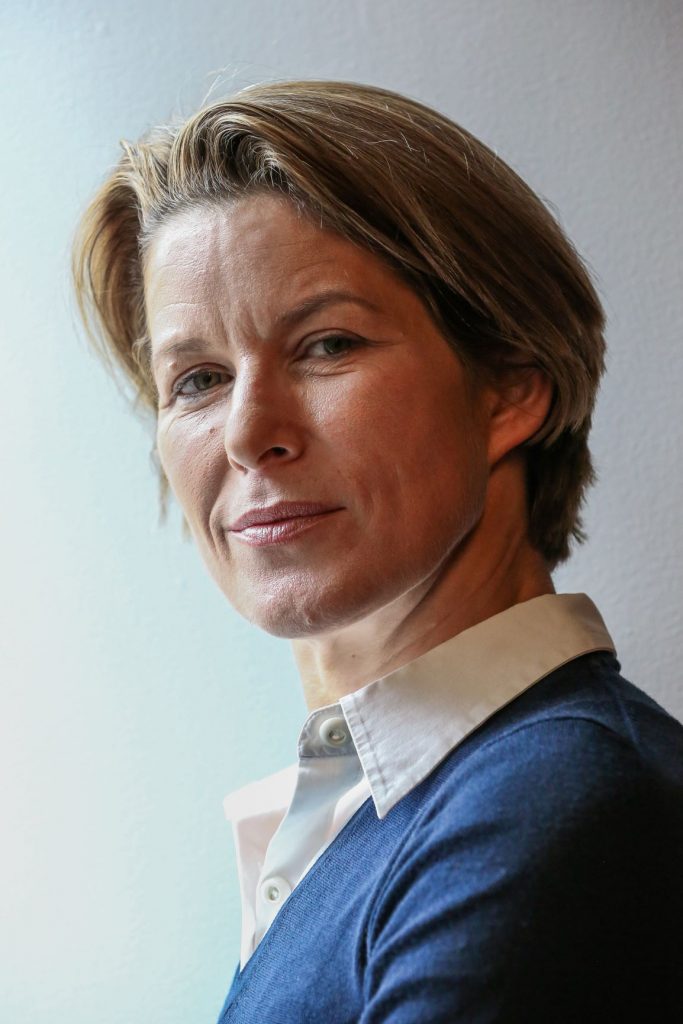
Stephanie has been both an economist and an economic journalist — she joined Bloomberg in 2017 and now does both, leading Bloomberg Economics and following a lifelong passion to demystify the global economy for a wider audience.
In what way have you broken glass ceilings or conventions? What challenges did you face, and how did you overcome them?
When I became the BBC’s Economics Editor, I was the first woman to occupy a specialist editor job. Happily, there have been plenty more since then, and in general I would say that economics has become a little less male-dominated over the course of my career. In a previous role, I was aware that I was paid much less than several male colleagues in similar roles. That’s a challenge I failed to overcome, but overall I don’t feel I have been held back by my gender. If anything, it has given me an edge — it’s striking how many of the major global banks now have female chief economists.
What advice do you have for future convention- and ceiling-breakers?
When you’re making a case for yourself, don’t start with the skills you don’t have. I thought it was just an outdated stereotype until I started interviewing women and men for jobs. So many women really do lead with the stuff they can’t do. It’s extraordinary.
Vandna Dawar Ramchandani, Singapore
“Understand and accept that every person and situation is different, so be empathetic and encouraging, and build trust so women feel empowered to share and take risks.”
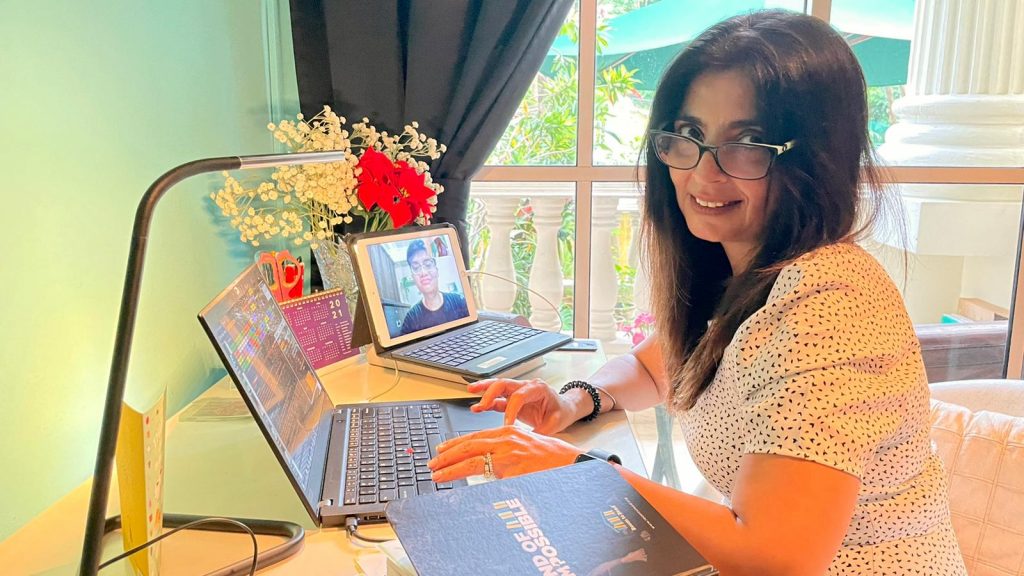
Vandna was born and raised in India. She joined Bloomberg in 1997 as a Terminal Sales rep, while living in Jakarta, Indonesia, and is now leading Corporate Philanthropy for APAC.
In what way have you broken glass ceilings or conventions? What challenges did you face, and how did you overcome them?
In Asia, particularly in India, a woman’s role is primarily expected to be that of a home-maker. I was committed to growing my career — even after having a family — taking on additional responsibility and relocating. When I first took on the roles of APAC Global Data Manager and then Singapore Office Committee chair, the first female in those roles, I did feel nervous about the step up, but there is so much support at Bloomberg, women just need to believe in themselves and lean in.
The biggest challenge is creating a balance that works for you, and often managing your guilt as a mum. There are no shortcuts so you start to run your life through “to-do” lists and constantly prioritize. My social life and personal time became secondary; my work and family were the priority. I wanted to live the life I dreamed of for my daughter and “walk the talk.”
What strengths do you believe your identity and experiences bring to your professional and personal life?
Authenticity, drive, hard work, empathy, and the desire to constantly challenge the status quo! Multi-tasking is not a choice, so you just become good at it. You learn to problem-solve and be creative, which lends itself wonderfully to a career at Bloomberg.
Nita Ditele-Bourgeois, New York
“Take risks and embrace failures. Be determined, never settle, and let your skills speak for themselves; not your gender.”
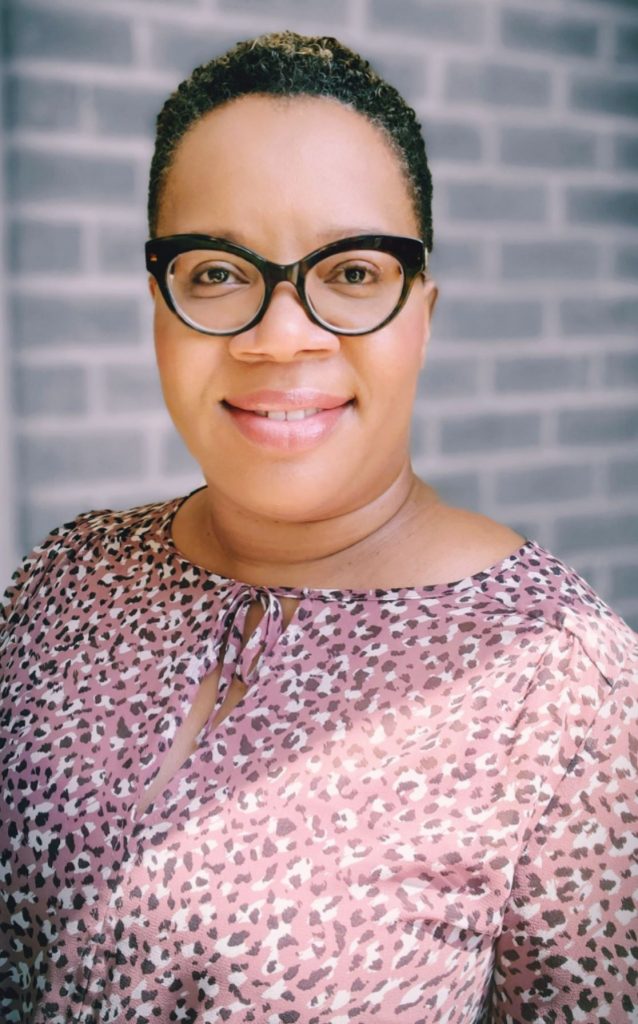
Originally from the South, Nita was raised in New York at the heart of a family that fostered continuous learning. She joined Bloomberg in 2007 as a Legal Negotiations Specialist, and is now a Product Operations manager in Enterprise Data.
In what way have you broken glass ceilings or conventions? What challenges did you face, and how did you overcome them?
Last year, after 13 years in Legal, I joined Enterprise Data. I saw an opportunity to leverage transferable skills, challenge myself, and grow. I wanted to be part of an exciting journey with the business from a different vantage point.
After encountering gender stereotypes and micro-aggressions throughout my career, I’ve found that the confidence and determination instilled at young age provided me the resilience and fortitude to address challenges head-on.
What strengths do you believe your identity and experiences bring to your professional and personal life?
Active listening has made the biggest impact. It takes time and intentionality, but the outcomes are enormous: positive engagement, sharing ideas, productivity, and stronger communication between individuals.
Celine Shi, Shanghai
“My experience has really been about breaking ceilings in my own mind.”

A native of Sichuan, China, Celine joined Bloomberg Analytics in 2011 in Singapore before taking on the challenge of expanding team coverage in Beijing. She now manages buy-side product specialists in Shanghai.
In what way have you broken glass ceilings or conventions? What challenges did you face, and how did you overcome them?
Early in my career, I didn’t want to draw attention to my sexual orientation, as I truly believe it has no relevance to how well someone performs at work. I kept my identity as a queer woman to myself, even though Bloomberg has been very supportive and open about our LGBTQ community. I later realized that this secret impacted how comfortable I was with colleagues and friends — I wasn’t being myself. I came out in 2017 and was able to fully embrace my friendships and work relationships, which helped me become more confident and perform better.
What advice do you have for future convention- and ceiling-breakers?
Do not set your own glass ceiling. Many of the women I know feel less confident about opportunities and question themselves: Am I really qualified for this? Do I have what it takes? We should be more confident in the different values and experiences we bring, and give ourselves a chance to be seen.
Deanna Hallett, London
“Seek out individuals and groups of people who will support you, lift you up, challenge you, and affirm your identity and your goals — no one can reach that glass ceiling alone.”
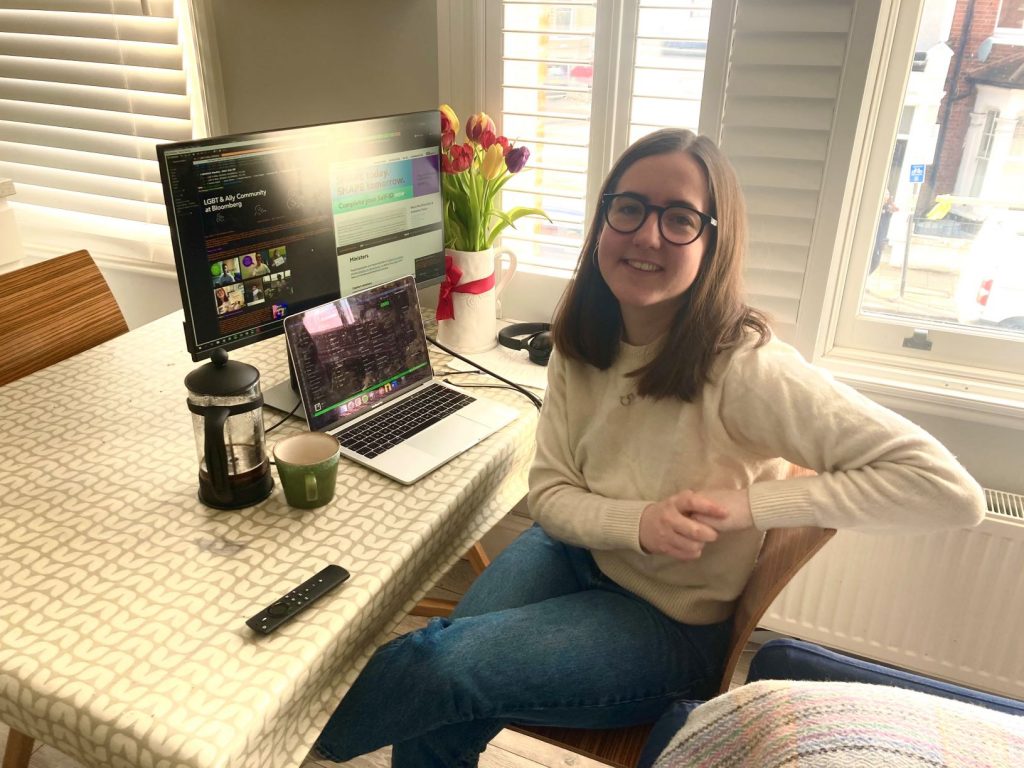
Deanna interned for Bloomberg twice before joining full-time after graduating university in 2019. She currently works in UK government and regulatory relations and is the co-lead for the LGBTQ+ and Ally Community in EMEA.
In what ways have you broken glass ceilings or conventions?
I was the first woman in my family to apply to university, the first to run for local councillor, the first to move abroad, and the first woman to come out as LGBT+ in my family. I faced a lot of challenges growing up, including poverty, and psychological and physical abuse from my father, which was particularly acute when I came out as gay. More broadly, I grew up in an environment where I was just expected to manage, have kids, and then become a full-time mum. It was difficult pursuing my own goals and independence when it didn’t marry the view of what my family expected.
What can our colleagues and communities to do become better allies to women in the workforce?
Actively listen. It’s only by taking into consideration people’s experiences that we can ensure the glass ceiling is shattered for all women — particularly LGBT+ women and women of colour, who are too often left behind.
Click here to read the full article on Bloomberg.


To create products that serve increasingly diverse customers and solve a wider range of social problems, technology companies need women engineers. However, only 25 percent of math and computer science jobs in the United States are filled by women, and one-third of women in the U.S. and China quit these jobs mid-career due to factors like social isolation, a lack of access to creative technical roles and difficulty advancing to leadership positions.
At Bloomberg, we’ve established a company culture that supports gender equality in a multitude of ways – from company-wide Diversity & Inclusion business plans to a newly expanded family leave policy. But we know that’s not enough. In recent years, we’ve adopted a system-wide approach to increasing the number of women in technical roles, taking steps to remove barriers to advancement both inside our organization and beyond Bloomberg, supporting female talent from middle school through mid-career.
While the number of women in technical jobs at Bloomberg is growing, we’re committed to making progress faster and completing all the steps needed to solve the equation. Here are some of the ways we’re tackling this important deficit – and making quantifiable change.
Early engagement
Bloomberg supports organizations that help increase women’s participation in STEM and financial technology, exposing students to various career options through Bloomberg Startup and encouraging our female engineers to engage with the next generation of talent.
Collaboration, creativity, and a love of problem-solving drew Chelsea Ohh to the field of engineering. Now she works at Bloomberg as a software engineer team lead, helping to provide critical information to financial decision makers across the globe.
Recruitment
We target our entry-level engineering recruiting efforts at colleges that have achieved or are focused on gender parity in their STEM classes. And because not all the best talent come from the same schools or have the same experiences, Bloomberg actively seeks women engineers with non-traditional backgrounds or career paths.
Talent development
Women engineers can sharpen their technical skills through open courses, on-site training sessions, and business hackathons held throughout the year. Bloomberg is committed to inspiring our female employees, eliminating barriers like impostor syndrome, and encouraging them to pursue opportunities in engineering.
Community & allies
To strengthen its network of female engineers, global BWIT (Bloomberg Women in Technology) chapters organize more than 150 events, mentoring sessions, and meet-ups a year. The community also engages male allies and advocates, sharing strategies to help them support their female colleagues.
Click here to read the full article on Bloomberg.